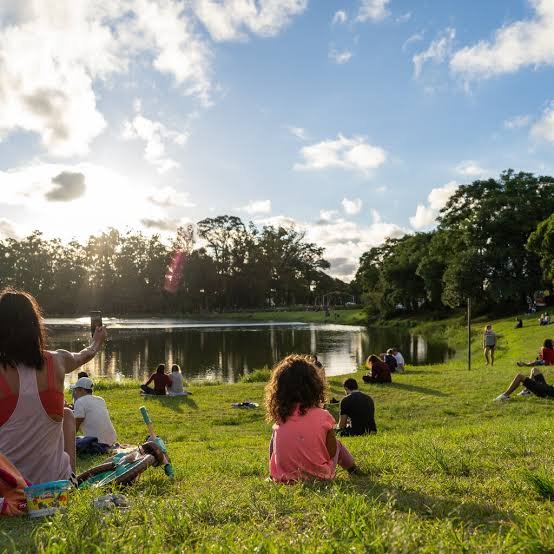
The International Meeting Cities of Care gathers researchers, professors, students, public managers, professionals, artists, urban collectives, civil society organizations, and social movements to discuss care as an organizing principle of urban life, planning, design, and public policies.
The meeting is based on the understanding that care is not limited to welfare services nor exclusively to actions directed at groups previously considered vulnerable. Care involves labor, practices, relationships, responsibilities, infrastructures, institutions, territories, knowledge, and socio-ecological conditions that sustain everyday and collective life.
In a context marked by the climate emergency, deepening social and territorial inequalities, the precarization of reproductive labor, population aging, migrations, and the crisis of democratic institutions, the meeting seeks to bring together theoretical formulations, empirical research, institutional experiences, civic initiatives, community practices, projects, cartographies, and artistic interventions.
Special attention will be given to experiences developed in urban peripheries, including family and community care networks, solidary practices, autonomous forms of organization, and situations of non-care, abandonment, inaccessibility, and territorial precarity. We are interested in understanding both the practices that sustain life and the social, political, and spatial conditions that hinder or prevent access to care.
The International Meeting Cities of Care is an activity linked to the research project "The caring city: contributions from the Brazilian context" and receives financial support from Mackpesquisa — the Research Incentive Fund of Mackenzie Presbyterian University.
The core of this call is the submission of EXTENDED ABSTRACTS. All proposals, whether for oral presentation or poster, will be initially submitted and evaluated through an extended abstract of up to 2,000 words, with a minimum of 500 words, in Portuguese, English, or Spanish. The choice of presentation modality must be indicated at the time of submission.
The extended abstracts may present theoretical papers, empirical research, methodological studies, analyses of policies, plans and programs, architectural, urban, and landscape design projects (built or unbuilt), cartographies, visual essays, institutional or community experiences, artistic interventions, and cultural, pedagogical, or curatorial practices.
Contributions from urbanism, architecture, urban and regional planning, geography, sociology, anthropology, arts, public policy, public health, social assistance, care economy, education, environmental studies, law, philosophy, design, and related fields are welcome.
Discusses how care is defined and its position in understanding urban life. Gathers approaches that treat it as labor, relationship, responsibility, everyday practice, ethical-political principle, condition of social reproduction, and commitment to the continuity of the common world. Explores the transition from sectoral or exclusively moral conceptions to formulations capable of reorganizing social relations, public responsibilities, and ways of inhabiting, planning, designing, and governing the city.
Examines how care is inscribed in the concrete conditions of urban life: housing, mobility, accessibility, facilities, public spaces, support networks, social and community infrastructures, and the ecological foundations of existence. Considers the territorial distribution, quality, continuity, and maintenance of these infrastructures and their capacity to foster autonomy, encounter, permanence, rest, security, recovery, and coexistence.
This axis welcomes papers on peripheries, favelas, and popular territories, including those that highlight territorial obstacles to care: narrow alleys, stairways, long distances, lack of accessible transportation, poor sidewalks, and other barriers that amplify dependency and overload. It also includes environmental and climate justice, biodiversity, urban waters, thermal comfort, air quality, socio-environmental risks, and territorial reparation.
Addresses the implications of care for urban planning, design, management, regulation, and policies. Analyzes how the State, market, families, communities, social organizations, and informal networks share — or fail to share — resources, time, labor, responsibilities, and power.
The axis incorporates both the institutional and civic dimensions of democracy. It aims to understand the capacity of citizens, organized associations, social movements, collectives, and free associations to formulate issues of common interest, produce knowledge, and intervene in decisions about their territories. The existence of participatory mechanisms is not taken, in itself, as democratization: it is important to examine who defines the problems, who participates, what knowledge is recognized, and what capacity different groups have to influence decisions, priorities, and resources.
Takes gender and social reproduction as structuring issues of the caring city and examines their articulations with race, class, age, disability, neurodivergence, sexuality, migratory status, and territorial location. Considers the social, sexual, and racial division of labor, the feminization and devaluation of reproductive activities, paid and unpaid domestic work, local and transnational care chains, and labor precarization.
Children, adolescents, older people, people with disabilities, and neurodivergent people are considered not just recipients of care, but subjects of knowledge, practices, and decisions. The axis incorporates decolonial, indigenous, afro-diasporic, traditional, and more-than-human perspectives, and welcomes cultural, artistic, affective, and symbolic approaches when these produce knowledge and care practices.
In addition to indicating a main axis, proposals may highlight issues that cut across the four axes. These intersections do not constitute a fifth axis, but help make fundamental relationships of care visible.